
We spend a lot of time preparing girls for puberty. We teach them their bodies will change, and we help them understand the changes they are experiencing are a normal and beautiful part of becoming a woman. At Guiding Star, we want girls to enter puberty with knowledge rather than fear, confidence rather than confusion, and a healthy respect for their female bodies they are learning to understand.
But what happens when that same woman reaches another major hormonal transition? Who prepares her for that? For many women, the answer is no one.
Instead, she may suddenly find herself wondering why her periods are changing, why she can’t sleep the way she used to, why she feels exhausted, why her emotions seem different, or why her body no longer responds to food and exercise in the same way. Hot flashes, night sweats, brain fog, changes in libido, vaginal dryness, mood changes, and shifts in metabolism can leave a woman wondering, “What is happening to me?” Too often, the response is simply, “That’s just menopause.” At Guiding Star, we believe women deserve more.
Seeing Perimenopause as the “Second Puberty”?
We don’t mean that perimenopause and puberty are medically identical. They aren’t. But there is something powerful about thinking of perimenopause as a women’s “second puberty”.
During puberty, a girl’s body undergoes significant hormonal changes as she moves toward reproductive maturity. During perimenopause, a woman’s body once again experiences significant hormonal fluctuations—but this time, she is moving into a new season of life. Just as puberty can bring changes to a girl’s mood, sleep, energy, and sense of self, perimenopause can bring changes that affect a woman’s body and wellbeing in pro-found ways.
The difference is that most of us had someone explain puberty to us. But many women reach their 40s and 50s without ever learning what happens to their hormones and cycles as they approach menopause. We prepare girls for their first major hormonal transition. Why shouldn’t we prepare women for their next one?
From First Period to Menopause
At Guiding Star, we believe education should continue throughout the entire lifespan of a woman. Our Intro to Womanhood Class brings pre-menstrual girls ages 9–13 together with their mothers, or another trusted adult woman, to learn about the natural biological functions of their developing female bodies. The goal isn’t simply to explain what a period is. We want girls to understand and embrace their changing bodies, develop a healthy respect for their female biology, and create an environment where mothers and daughters can continue talking openly as puberty unfolds.
Our Guiding Star Cycle Show Workshop builds on that foundation through an interactive, age-appropriate workshop, girls ages 9–12 get a behind-the-scenes look at natural rhythms of the female cycle, periods, and fertility. Stories, symbols, games, and hands-on activities make the experience engaging while helping girls discover something incredibly important: “I can only protect, what I value and respect”.
When girls understand their bodies, they have an opportunity to value and respect them. But that shouldn’t end when puberty does. The same woman who deserves to understand her body at 11 deserves to understand her body at 45.
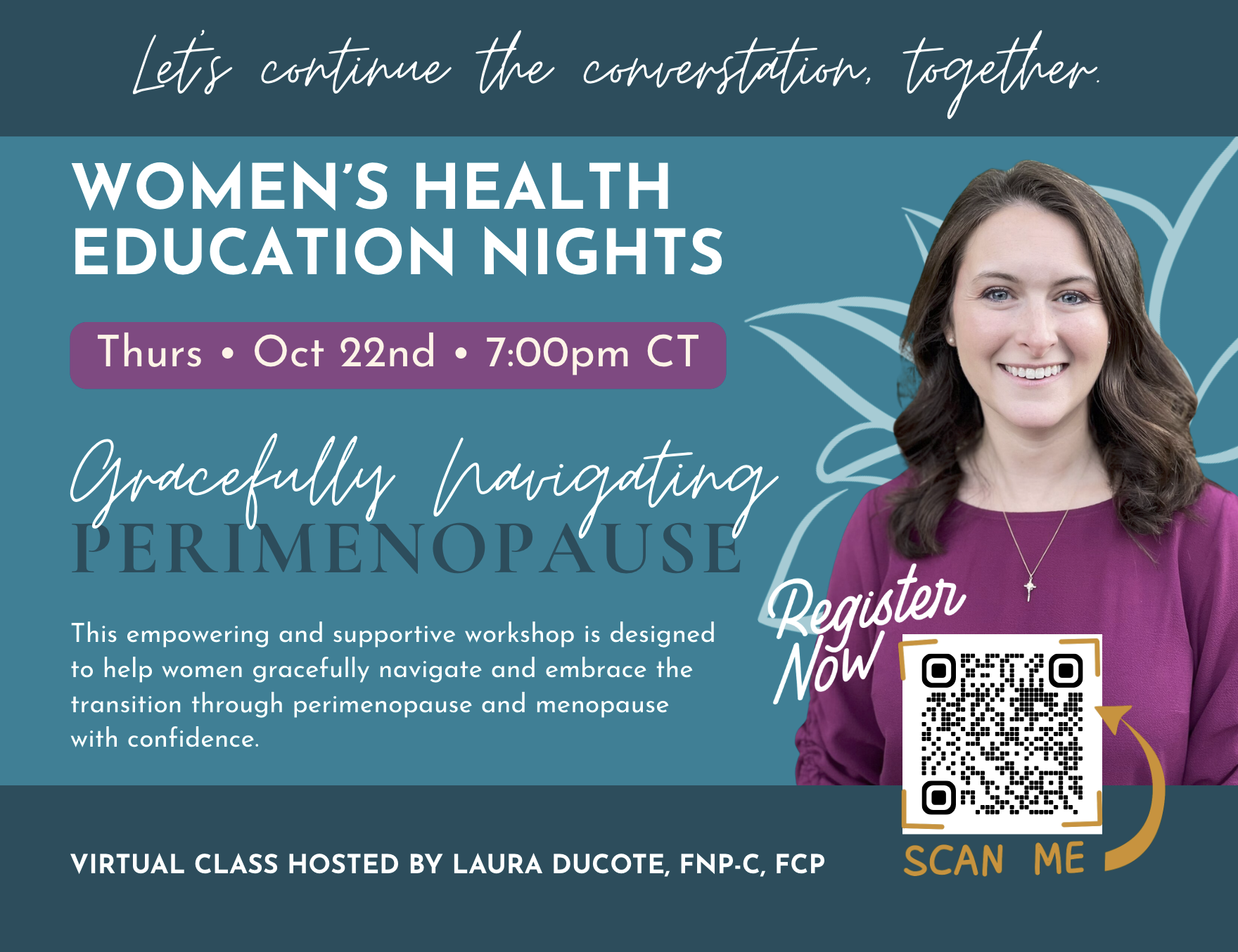
Gracefully Navigating Perimenopause
Perimenopause can be confusing because the changes don’t always happen in a predictable way. Hormone levels fluctuate, menstrual cycles become irregular, and symptoms can come and go. At Guiding Star, we believe there is a difference between accepting a natural transition and ignoring symptoms that deserve attention.
It can be easy for our healthcare system to reduce a woman to a collection of symptoms. Hot flashes become a problem to eliminate. Trouble sleeping becomes a problem to medicate. Weight gain becomes something to fight. Low libido becomes something to correct. But a woman is not a collection of disconnected symptoms—she is a whole person.
It is time healthcare started thinking about menopause the way we think about puberty. We prepare her, teach her, answer her questions, and remind her that her body is good. Imagine if women entered their 40s fully prepared for what hormonal changes might be ahead. Imagine if they already understood how their cycles will change, knew exactly which symptoms to expect, which ones were worth seeking additional care for, and had access to the support their body needs.
From the little girl learning about her first period, to the young woman discovering her fertility, to the mother nurturing her family, to the woman entering a new season of life—every season of womanhood matters. And every season deserves to be understood, embraced, and cared for.




Leave A Comment